Bus from SPLIT to PLITVICE LAKES
See timetable and Buy TicketAbout the route
Busticket4.me helps you easily search, compare and book ticket/s for the bus from Split to Plitvice lakes.
Bus from SPLIT to PLITVICE LAKES pass through the cities of ŠIBENIK, ZADAR (depending on the route). The road is about 302 km. Average length of travel according to the timetable is 05 hours and 35 mins. Luggage is usually paid per bag on all departures depending on the carrier.
Buses from Plitvice to Split offer fast and efficient transport at an affordable price. There is no bus station in Plitvice. Instead, there are two bus stops on the main road (Entrance 1 and entrance 2) passing by the national park Plitvice lakes. Despite the fact that there is no bus station, Plitvice lakes have a wardrobe where you can leave your luggage.
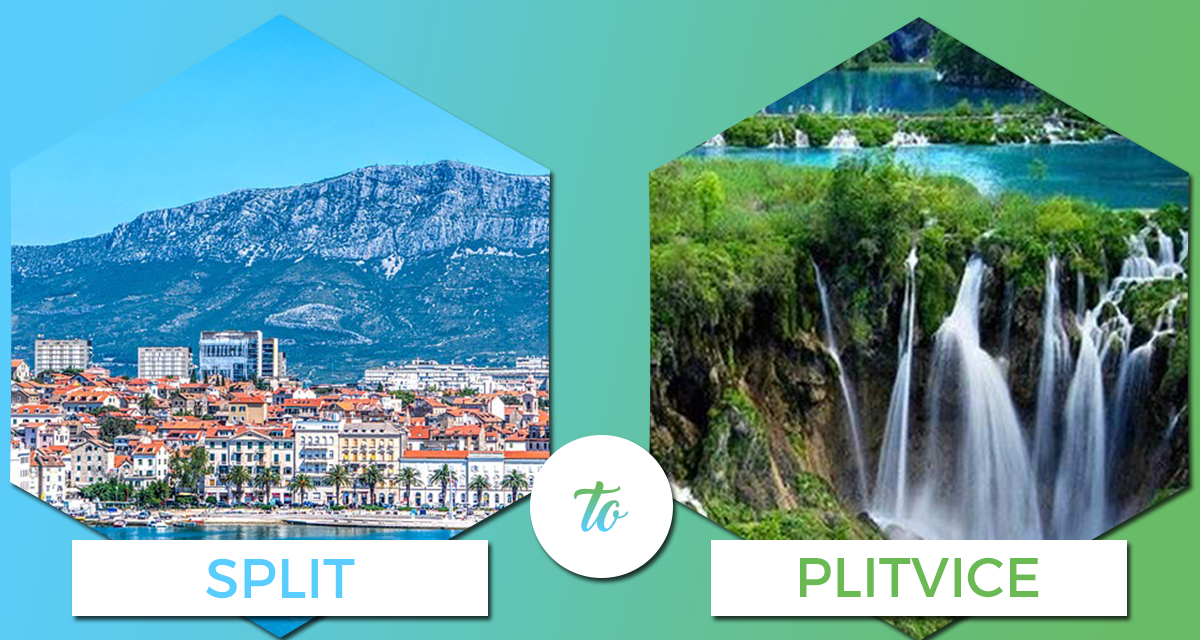
Plitvice Lakes National Park is the most visited national park in Croatia. It is situated in Lika, near the border with Bosnia and Herzegovina. The park is open all year around.
Timetable from SPLIT to PLITVICE LAKES can be found for days:
- Monday
- Tuesday
- Wednesday
- Thursday
- Friday
- Saturday
- Sunday
Buses have the smallest carbon footprint of all motorized transport modes. A bus going from Plitvice to Split will emit half the CO2 emitted by a train, and radically less than a car or an airplane.
About the station SPLIT
Bus station Split is located in the city centre and near the harbor and railway station, so the transfer of the passengers is very efficient. All parts of the city are connected by a dense network of bus lines and also with more than 30 lines of suburban and the wide urban traffic.
Next to the bus terminal there are numerous bars, several fast food restaurants and a large number of kiosks.
Less than a kilometer away from the station there are restaurants "Bistro Black Cat", "Olive", "Dalmatino", and hotels "Radddisson Blue Resort" and "Luxe".
Address of the bus station:
Coast of the Duke Domagoj, No. 12, 21000 Split, Croatia
Contact:
Phone: +385 (0) 21329-180
Fax: +385 (0) 21329-182
Info phone (domestic transport): +385 (0) 60327-777
Info phone (international transport): +385 (0) 21329-199
E-mail (information): info@ak-split.hr
Railway station and the ferry port are located in the city center, while the airport is located in Kaštela, which is 20 km away from Split. Airport bus goes several times a day from the city center to the airport and vice versa. Price per person is 30kn (4 euros approximately).
Read the short introduction text about Split - Croatia.
Useful numbers:
Doctor: (021) 481 060
Dentist: (021) 489 428
Police: (021) 307 111
Post office: (021) 342 400
Taxi: (021) 347 777
Jadrolinija: (021) 338 333
Tourist Office: (021) 348 600
About the destination PLITVICE LAKES
Plitvice Lakes National Park is one of the oldest national parks in Southeast Europe and the largest national park in Croatia. The national park is world-famous for its lakes arranged in cascades, and 16 lakes can be seen from the surface.
The national park was founded in 1949 and is situated in the mountainous karst area of central Croatia.
The Plitvice Lakes originate in the south of the park area at the confluence of Bijela Rijeka (English White River) and Crna Rijeka (English Black River). These rivers originate south of the municipality of Plitvički Ljeskovac and unite at one of the bridges in this village.
In 1979, Plitvice Lakes National Park was added to the UNESCO World Heritage register.
The protected area extends over 296.85 square kilometres (73,350 acres). About 90% of this area is part of Lika-Senj County, while the remaining 10% is part of Karlovac County. The lakes are separated into an upper and lower cluster formed by runoff from the mountains, descending from an altitude of 636 to 503 m (2,087 to 1,650 ft) over a distance of some eight km, aligned in a south-north direction. The lakes collectively cover an area of about two square kilometres (0.77 square miles), with the water exiting from the lowest lake forming the Korana River.
The name Plitvice was first mentioned in a written document in 1777 by Dominik Vukasović, the priest of Otočac. This name was designated due to natural phenomena that have created the lakes. Nature formed shallow basins (Croatian pličina or plitvak, plitko means shallow), which have been filled with water. For centuries, water has changed the limestone and thus the landscape of this area.
The overall water body area of the national park is about 2 km2 (0.77 sq mi). The two largest lakes, Prošćansko jezero and Kozjak, cover about 80 percent of the overall water body area. These lakes are also the deepest, with a depth of 37 and 47 metres (121 and 154 ft) respectively. On Lake Kozjak, low-noise and ecologically-friendly electric boats are being used. None of the other lakes in the park exceeds 25 metres (82 feet) in depth. The altitude drop from the first lake to the last is 133 metres (436 feet).
The 16 lakes that can be seen from the surface are grouped into the 12 Upper Lakes (Gornja jezera) and the four Lower Lakes (Donja jezera).
The Plitvice Lakes national park is heavily forested, mainly with beech, spruce, and fir trees, and features a mixture of Alpine and Mediterranean vegetation. It has a notably wide variety of plant communities, due to its range of microclimates, differing soils and varying levels of altitude.
Scientists have so far listed 1,267 different plants out of 109 species that can be found within the area of the national park. 75 plants are endemic, which means that they have first been defined and classified in this area of the world or not far from it.
For reasons of the poor industrial development of this region and early introduced protection measures, a nearly untouched landscape has been preserved. In the partially primeval beech and fir forests various rare species, such as the brown bear have survived. At the Plitvice Lakes, all species continue to exist that have already existed before the coming of man. This is a rare case worldwide.